A 7-Day Itinerary in Western Sicily: Complete Guide Day by Day
A 7-day itinerary in Western Sicily allows you to visit Erice, Trapani, the salt flats, Segesta, the Egadi Islands, the Zingaro Nature Reserve and San Vito Lo Capo using a single logistical base in Valderice, centrally located relative to all the main attractions. The maximum daily driving distance is around 50 km.
This guide proposes a circular itinerary designed for travellers arriving at Trapani Birgi Airport, with one day dedicated to each thematic area: culture (Erice, Segesta), food and wine (Marsala, salt flats), nature (Zingaro, Favignana) and coast (San Vito Lo Capo). The itinerary is suitable for all seasons of the year, with particular attention to Western Sicily's mild climate — ideal even in autumn and winter for travellers from Northern Europe.
Itinerary summary day by day
| Day | Destination | Theme | Km from base |
|---|---|---|---|
| 1 | Trapani old town | Arrival + orientation | 8 km |
| 2 | Erice | Medieval hilltop town + cable car | 5 km |
| 3 | Trapani salt flats + Marsala | Food and wine | 30 km |
| 4 | Segesta | Archaeology + afternoon relax | 30 km |
| 5 | Favignana (Egadi) | Islands + sea | 8 km + ferry |
| 6 | Zingaro Nature Reserve | Hiking + coves | 25 km |
| 7 | San Vito Lo Capo + departure | Beach + return to airport | 40 km |
How to plan the itinerary: practical tips
When to visit Western Sicily (by season)
Western Sicily is a year-round destination: each season offers a different experience.
- Spring (March-May): the absolute best season. Nature is lush and green, Mediterranean scrub in full bloom, pleasant temperatures (18-24°C daytime). Perfect for nature excursions in the Zingaro Nature Reserve, for visiting Segesta and Selinunte without the summer heat, and for hiking to Erice. The sea becomes swimmable from mid-May.
- Summer (June-September): the most intense season. Sea swimming, boat trips to the Egadi Islands, beaches of San Vito Lo Capo. Temperatures 25-33°C — archaeological sites and wineries are best visited early in the morning or at sunset. High tourist season: book well in advance.
- Autumn (October-November): perfect for a food, wine and culture itinerary. Still mild climate (18-24°C), archaeological sites and museums without crowds, grape harvest at the Marsala wineries, festivals dedicated to new olive oil and autumnal produce.
- Winter (December-February): Western Sicily has a remarkably mild winter. Average daytime temperatures 14-18°C, often sunny. For visitors from Northern Europe this is a comfortable season, comparable to local spring. Ideal for Erice, Segesta, wineries, salt flats, historic town centres and Sicilian winter cuisine. The sea isn't swimmable but the coast remains scenic for walks.
How to reach Western Sicily
The itinerary is designed for travellers arriving at Trapani Birgi Airport, served by direct flights from several Italian cities and a number of European capitals. It is also possible to fly into Palermo Punta Raisi Airport (approximately 87 km from Valderice, just over an hour by car), which offers more frequent international flights.
Distances from airports to the Valderice base: 23 km from Trapani Birgi (25 minutes by car), 95 km from Palermo (approximately 1 hour and 10 minutes).
Where to stay as a base for the itinerary
For a 7-day itinerary we recommend choosing a single base in Valderice, on the Gulf of Cornino, rather than moving every night. This choice saves time and reduces the stress of continuous check-ins, while maintaining a central position relative to all the stops on the itinerary.
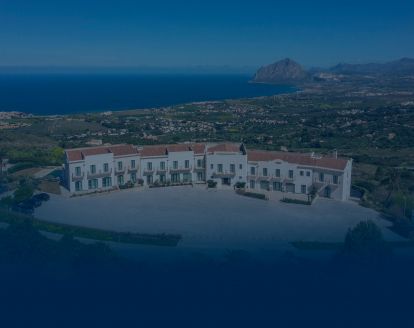
Valderice hosts two 4-star hotels under the same ownership, both with SPA and panoramic sea views over the Gulf of Cornino, ideal as a logistical base: the Resort Venere di Erice and the Hotel Parco degli Aromi. Both properties are 8 km from the centre of Trapani, 5 km from Erice and 23 km from Trapani Birgi Airport.
We explore the choice between the two properties in more detail in the dedicated section "Where to stay to explore Western Sicily" at the end of this guide.
Rental car: is it necessary?
Yes, a rental car is essential for a 7-day itinerary in Western Sicily. Public transport between inland locations (Segesta, Erice, salt flats) is limited and doesn't allow you to keep to the timing of a day-by-day itinerary. We recommend renting your car directly at the arrival airport (Trapani Birgi or Palermo). For Favignana and the Egadi Islands you don't need a car: you take the Liberty Lines ferries from Trapani harbour and move around the island by bike.
Day 1: Arrival at Trapani Birgi and first taste of the city
The first day of the itinerary is dedicated to arrival and first contact with Trapani. After landing at Trapani Birgi Airport and collecting the rental car, we recommend heading to the base in Valderice for check-in, dropping off your luggage and dedicating the afternoon to an initial orientation tour of Trapani's old town.
What to see in Trapani old town in one afternoon
Trapani's old town extends along a sickle-shaped spit of land, between the Tyrrhenian and the Mediterranean. It can comfortably be visited on foot in 2-3 hours, starting from the western end.
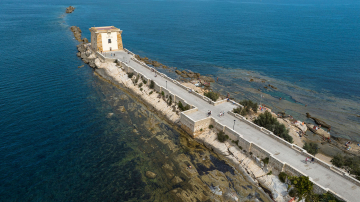
- Torre di Ligny — the westernmost point of Sicily. A fortress built in 1671 as a lookout tower against corsairs, today home to the Civic Museum with maritime archaeological finds (helmets from the First Punic War, Roman and Phoenician amphorae). From the terrace you can admire the meeting of the two seas and, on clear days, the Egadi Islands. Hours and ticket prices vary seasonally: check with the museum before your visit.
- Cathedral of San Lorenzo (Trapani's Duomo) — Corso Vittorio Emanuele. Baroque façade, three-arched portico, interior with works from the Neapolitan school. Free entry (respect the schedule of religious services).
- Porta Garibaldi — the historic entrance to the old town, on the southern side of the sickle. Built in the sixteenth century and restored in the eighteenth, it opens onto Via Garibaldi, one of the town's most beautiful streets lined with Baroque palaces.
- Church of Purgatory — Via San Francesco d'Assisi. It houses the famous Mysteries of Trapani, 20 wooden statuary groups that parade on Good Friday in the longest religious procession in Italy (24 continuous hours).
- Mura di Tramontana — panoramic walk along the northern coast of the old town, with views over the harbour and the Church of Annunziata in the distance.
Dinner and return to the Resort
For dinner on the first day there are two options:
- Dinner in Trapani's old town — to enjoy the famous Trapanese-style fish couscous in one of the historic centre's trattorias. Book in advance on summer weekends.
- Dinner at the Resort in Valderice — after a day of travel, many prefer to return to their hotel. At the Resort Venere di Erice, the Rubacuori Restaurant offers Sicilian cuisine with fish specialties, including Mazara Red Prawns — a Slow Food Presidium.
The evening return from Trapani old town to the Resort takes around 15-20 minutes by car (8 km, direction Erice-Valderice).
Day 2: Erice, medieval hilltop town and cable car
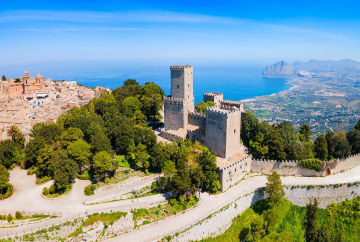
The second day is dedicated to Erice, one of the most fascinating medieval hilltop towns in Italy, perched at 750 metres altitude on the summit of Monte San Giuliano. A maze of cobbled streets, churches, Norman palaces and historic pastry shops, with panoramic views over the Gulf of Cornino, Trapani, the Egadi Islands and — on clear days — Mount Etna in the distance.
How to reach Erice: the Trapani-Erice cable car
Erice can be reached in two ways: by car via the panoramic road (approximately 25 minutes) or by the Trapani-Erice cable car, which in about 10 minutes connects the valley station on Via Capua in Trapani with the mountain station, at the entrance to the hilltop town. The cable car is recommended both for the aerial view enjoyed during the ride — with panoramas over the salt flats, the coast and the Egadi Islands — and to avoid traffic and the difficulty of finding parking within the town.
Indicative hours for 2026 (always check the official website before visiting):
- High season (July-August): from 8:30 until midnight or 1:00 AM on weekends
- Mid-season (April-June, September-October): from 8:30-9:30 until 20:00-24:00 depending on the day
- Low season (December-March): reduced hours
⚠️ Please note — Annual maintenance closure
The Trapani-Erice cable car is generally closed from 3 November to 4 December for maintenance. During this period Erice is only reachable by car via the panoramic road.
Operational rule: when Monday is a public holiday, the first following working day opens at 14:00 (routine maintenance).
Fares and reservations: subject to change and may differ between the ticket office and online purchase. Check the official website funiviaerice.it or contact the Valley Station directly (Tel. +39 0923 569306).
Parking: two cable car parking lots (P1 Via Capua and P2 Via Avellino) in Trapani, fare €5 for the first 3 hours + €1/hour thereafter.
What to see in Erice
The hilltop town is comfortably visited on foot in half a day (cars are not allowed in the historic centre). Here are the unmissable stops:
- Castello di Venere (Castle of Venus) — the twelfth-century Norman fortress that gives the Resort its name. Built on the ruins of the Elymian-Phoenician-Roman temple dedicated to the goddess Venus Ericina, it stands at the summit of the mountain with 360° views over the Gulf of Cornino and the Egadi Islands. Managed by the Fondazione Erice Arte, it has seasonal hours (10:00-18:00 spring/autumn, 10:00-19:00 summer, reduced hours in winter). Recommended: purchase the Erice Card which grants access to all the town's cultural sites with a single ticket.
- Giardini del Balio — panoramic park at the foot of the Castle of Venus. Free entry, one of the most photographed viewpoints in Italy.
- Real Duomo of Erice (Mother Church) — Piazza Umberto I. Built in 1314 by Frederick III of Aragon, with the adjacent Tower of King Frederick. Richly decorated Gothic interior, housing a marble Madonna Assumed by Domenico Gagini.
- Torretta Pepoli — small Moorish building between the Balio Gardens and the Castle, today the Peace Observatory. One of the most beautiful panoramas in the town.
- Spanish Quarter — an ancient military outpost, today a viewpoint on the northern side of the mountain with views over Mount Cofano and the sea.
For a complete list of attractions and themed itineraries within the town, consult our dedicated guide: What to see in Erice.
Where to eat (and where to taste the pastries) in Erice
Erice is famous for its historic pastry shops that carry on recipes from the medieval convents. Absolute must-try:
- Genovesi — small pastries of shortcrust dough filled with warm pastry cream, typical of Erice. Best eaten straight from the oven.
- Pasticceria Maria Grammatico — Via Vittorio Emanuele. Erice's most celebrated pastry shop, famous for almond pastries, marzipan, sospiri and cassatelle. Historic shop since 1963.
- Ericini — decorated almond paste sweets, another classic of the town.
For lunch, the town offers trattorias with Sicilian cuisine and breathtaking views. Alternatively, you can head back to the Resort in Valderice in the mid-afternoon and enjoy dinner at the Rubacuori Restaurant.
Day 3: The Trapani Salt Flats and Marsala
The third day is dedicated to the food and wine soul of Western Sicily: the ancient salt flats between Trapani and Marsala, the Salt Museum in Nubia, and in the afternoon the historic wineries of Marsala, where in 1833 one of Italy's iconic wines was born. An itinerary of about 60 km round trip from the base in Valderice.
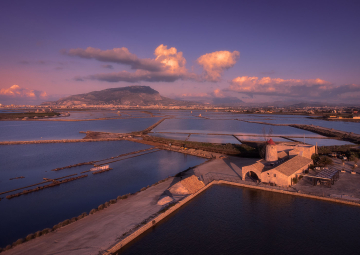
The WWF Salt Flats Reserve of Trapani and Paceco
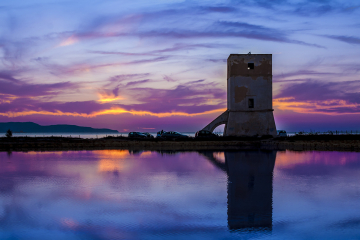
The "Trapani and Paceco Salt Flats" Nature Reserve was established in 1995 and is managed by WWF Italy. It extends over about 1,000 hectares along the coast between Trapani, Paceco and Nubia, and is one of the main wetlands in Sicily: home to over 200 species of birds, including pink flamingos, the great white heron, the black-winged stilt and the kingfisher.
How to visit the Reserve:
- The Mulino Maria Stella Visitor Centre (SP 21 corner of Via Carlo Messina) is the starting point for WWF guided tours: bookings must be made at least a week in advance and require a voluntary contribution.
- Access to the Reserve is free of charge for those who want to walk along the embankments independently.
- The best period for birdwatching is spring and autumn (migrations). From July to September you can witness the manual salt harvest.
- Wear comfortable shoes (dirt paths), hat, water and — if possible — binoculars for birdwatching.
The Salt Museum in Nubia
Inside the Reserve, in the Nubia district, is the historic Salt Museum — a private facility managed by the Culcasi family. The museum is housed in an ancient baglio (rural fortified farm) with a 15th-century windmill, and collects the traditional tools of the salt workers, old black-and-white photographs and original implements that tell the millennia-old story of Trapanese salt production.
The visit includes the Salt Worker's Path — a walk along the embankments of the salt pans where you can closely observe the marine salt production cycle, from the salt pyramids to the fourteenth-century windmills. At the end you can taste the flavoured fleur de sel produced on site.
Indicative hours and prices: open daily in season, Museum + Path ticket approximately €3-4. Please check directly with Saline Culcasi for updated hours.
Marsala and the historic Marsala wineries
In the afternoon the itinerary continues to Marsala, a city founded by the Phoenicians (Lilibeo) and made famous by Marsala wine, one of the first fortified wines to gain international recognition. It was the English merchant John Woodhouse in 1773 who intuited its commercial potential, but it was Vincenzo Florio in 1833 who built the brand's fortune with his historic wineries, still open for tours today.
Recommended wineries for a visit:
- Cantine Florio — Via Vincenzo Florio 1, Marsala. Founded in 1833, they house three barrel cellars of 165 metres each with 104 arches, and safeguard around 5,500,000 litres of Marsala under ageing. Tours on reservation: "In the footsteps of the Florios" with tasting (~€25), "The Genesis of Marsala" (~€30). Info and bookings on the official website cantineflorio.it.
- Cantine Pellegrino — historic Marsala winery founded in 1880, with tours and tastings in an intimate atmosphere.
- Cantine Rallo — another icon of historic Marsala, today also a producer of high-quality Sicilian white wines.
Also worth a stroll around the historic centre of Marsala: Piazza della Repubblica with the Mother Church, the San Pietro Monumental Complex, and the Baglio Anselmi Archaeological Museum which houses the Punic Ship of the third century BC, the only surviving example in the world of a Carthaginian warship.
Sunset over the salt flats: the return
On the way back to Valderice, we recommend planning a stop at the salt flats about an hour before sunset. The golden light transforms the salt pans into pink mirrors, the windmills become dark silhouettes against the horizon and — with a bit of luck — you may spot the flamingos in flight.
It's one of the most photographed sunsets in Italy. After the show, return to the Resort in Valderice for dinner (about 25 minutes by car).
Day 4: The Temple of Segesta and afternoon relax
The fourth day is dedicated to one of the most evocative archaeological sites in the Mediterranean: Segesta, ancient capital of the Elymian civilisation, famous for its Doric Temple and Greek Theatre. A morning of great emotional impact, followed by a free afternoon to return early to the Resort and enjoy the pool and SPA.
What to see at the Archaeological Park of Segesta
The Archaeological Park extends over Monte Barbaro and includes two main monuments connected by an internal shuttle bus (the area is large and uphill).
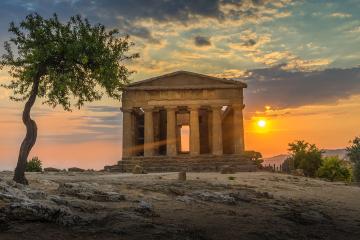
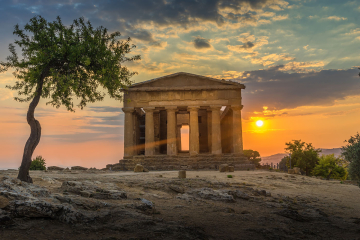
- The Doric Temple — built around 430 BC, is one of the best preserved Doric temples in the ancient world. It has 6 columns on the front and 14 on the sides, but was never completed: the cella and roof are missing, and the columns are not fluted. This unfinished state allows scholars to study ancient construction techniques. It stands alone on an isolated hill, with a spectacular view over a scenic valley.
- The Greek Theatre — carved into the rock of Monte Barbaro between the late third century BC and the early second. It has a diameter of about 63 metres and could hold up to 5,000 spectators. Oriented towards the Gulf of Castellammare, it offers a breathtaking panorama. During the summer it hosts the Segesta Teatro Festival, with classical performances of Greek tragedies and concerts.
- Urban area and Sanctuary — remains of the fortified gate, towers, part of the city walls and an Elymian rite sanctuary.
Practical information for 2026 (always check the official website before visiting):
- Hours: 9:00-18:00 (from 29 March to 30 September) — reduced hours in autumn-winter (until 15:30 between November and February)
- Tickets: full €14, reduced €7. Free entry on the first Sunday of every month
- Contacts: Tel. +39 0924 952356 — parco.archeo.segesta@regione.sicilia.it
- Recommendation: allow around 2-3 hours for the visit, wear comfortable shoes and bring water (little shade along the route)
How to reach Segesta from Valderice
Segesta is located in the municipality of Calatafimi Segesta, about 35 km from Valderice (just under 45 minutes by car). The fastest route is via the A29 motorway in the direction of Palermo, taking the Segesta exit.
We recommend leaving the Resort early in the morning to arrive at opening time (9:00): both for the cooler temperature during the visit — especially in the warmer months — and to enjoy the morning light on the Temple, when the columns take on a particularly photogenic golden hue.
Free afternoon: relax at the Resort
Returning from Segesta by midday, the afternoon of the fourth day is designed as a strategic pause in the itinerary. After three intense days of visits (Trapani old town, Erice, salt flats and Marsala), a few hours off is the best choice for tackling the following stops with energy (Egadi, Zingaro, San Vito).
At the Resort Venere di Erice, the afternoon can be spent:
- By the panoramic infinity pool with views over the Gulf of Cornino
- At the Aqva di Venere Spa with wellness journey (sauna, hammam, indoor heated pool at 30°C)
- Simply reading a book on the terrace overlooking the sea
For dinner you can choose the Rubacuori Restaurant of the Resort for a gourmet meal — perhaps accompanied by a glass of Marsala chosen after yesterday's visit to the wineries.
Day 5: The Egadi Islands — Favignana
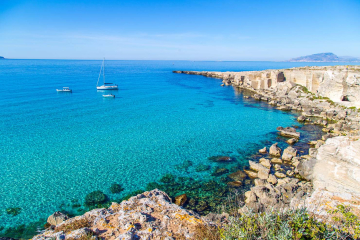
The fifth day is dedicated to Favignana, the largest of the Egadi Islands, called "the butterfly on the sea" for its geographical shape. An island of white calcarenite, quarries dropping sheer to the sea, beaches among the most photographed in Italy and a long tradition tied to tuna fishing. A full day of sea, nature and Sicilian industrial history.
How to reach Favignana from the port of Trapani
Favignana is reached from the port of Trapani with the hydrofoils of Liberty Lines — the main connection — or with the traditional Siremar ferries (the only ones that also transport vehicles). Ticket offices are located on Via Ammiraglio Staiti, at the port.
- Crossing time: 30-40 minutes by hydrofoil, about 1 hour by traditional ferry
- Frequency: 13-28 departures per day, spread between first crossing (~6:50) and last (~19:30-20:00, up to 21:00 in summer)
- Indicative fares: from €12 per person by hydrofoil (check libertylines.it for updated prices)
- Tip: book online in advance during high season months (July-August), especially for morning crossings, and arrive at the port at least 30 minutes before departure
How to reach the port of Trapani from Valderice: 8 km (~15 minutes by car). The most convenient parking is at the port itself, with hourly fares. Best to leave the Resort around 8:00 to catch one of the first crossings.
Bike or boat? How to move around the island
Favignana is small (about 20 km² in area) and well visited in two complementary ways:
- By bike — the typical means of transport on the island. Numerous rental shops near the port (~€10-15 per day). From June to September motor vehicles are banned for non-residents, so the bike is the obligatory (and ideal) choice to reach Cala Rossa, Cala Azzurra and the scenic viewpoints.
- By boat — for those who want to admire the island from the sea and reach isolated coves. Day tours leave from the port (~€30-50 per person depending on format). Perfect for seeing the Bue Marino Cave, the Lovers' Grotto and for snorkelling in the waters of the Egadi Marine Protected Area.
What to see in Favignana
- Cala Rossa — the most iconic beach in Favignana. Its name is tied to the naval battle of the Egadi in 241 BC between Romans and Carthaginians. Crystal-clear waters, white calcarenite cliffs, often in the rankings of Italy's most beautiful beaches. Access via a short walk.
- Cala Azzurra — another famous cove, with shallow turquoise waters. More accessible than Cala Rossa, ideal for families with children.
- Bue Marino — spectacular rocky cove, with the old quarry transformed into a natural pool.
- Former Florio Tuna Fishing Plant — the historic tuna processing plant of Favignana, founded by the Florio family in the nineteenth century. Once the largest in Europe for tuna processing, it closed in 1981. Today it is a museum open to the public that tells the story of the "mattanza", the ancient rite of red tuna fishing and Sicilian industrial revolution of the nineteenth century.
- Piazza Madrice and old town — the urban heart of the island, with the Mother Church and calcarenite palaces. Perfect for an aperitif at sunset and to taste local cuisine (tuna in every form).
- Tuff quarries — north of the island. Ancient abandoned calcarenite quarries, today suggestive trekking paths between white walls and Mediterranean vegetation.
Evening return to Valderice
Last crossings back to Trapani are generally around 19:30-20:00 (up to 21:00 in summer). We recommend catching the late afternoon hydrofoil, to enjoy the sunset light over Favignana harbour and return to the Resort in time for dinner — remembering to allow for the Trapani-Valderice drive (8 km, 15 minutes).
For dinner, after a day at sea, many guests appreciate dining directly at the Resort at the Rubacuori Restaurant, with local fish specialties.
Day 6: The Zingaro Nature Reserve
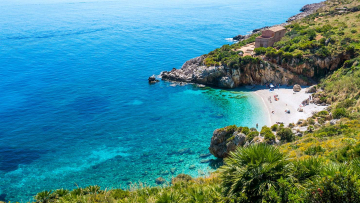
The sixth day is dedicated to the Zingaro Nature Reserve, the first protected area established in Sicily in 1981 after the historic march of 18 May 1980, when over 3,000 citizens occupied the territory to stop the construction of a coastal road. Today it is one of the most beautiful stretches of coast in Italy: 7 kilometres of limestone cliffs, seven pebble coves, crystal-clear waters and unspoilt Mediterranean scrub.
How to reach the Zingaro Nature Reserve
The Reserve has two entrances:
- South entrance — from Scopello, a hamlet of Castellammare del Golfo. This is the main and recommended entrance: larger parking lot and visitor centre right after the access tunnel.
- North entrance — from San Vito Lo Capo. In some periods it may be closed on weekdays for maintenance work on the access road.
From Valderice the south entrance is about 40 km away (~50 minutes by car), driving along the panoramic coastal road. As this is the fifth day of the itinerary, you can leave calmly after breakfast (8:30-9:00) to arrive at the entrance before 10:30.
The trails of the Reserve
Inside the Reserve there are no roads or motorised vehicles: you can only walk. There are three classic trails of increasing difficulty:
- Coastal trail (main) — 7 km, ~2 hours one way at a tourist pace. Runs along the sea and touches all seven coves. It is the easiest and suitable for everyone, including families with children (who can stop at the first coves).
- Mid-slope trail — ~8.5 km, ~4 hours. Medium difficulty, panoramic. Crosses the upper part of the Reserve with views from above over the coves.
- High trail (Zingaro Alto) — 17 km, ~7 hours. Reserved for expert hikers. Crosses Monte Speziale (914 m) and Monte Passo del Lupo.
The seven coves and the museums
Along the coastal trail you'll encounter seven coves of white pebbles, all reachable only on foot. Starting from the south entrance (Scopello), you meet them in this order: Cala Capreria, Cala del Varo, Cala della Disa, Cala Berretta, Cala Marinella, Cala Torre dell'Uzzo, Cala Tonnarella dell'Uzzo (the largest, at the north entrance).
Along the route there are also four small museums accessible with the entry ticket: the Visitor Centre, the Naturalistic Museum, the Manna Museum and the Weaving Museum. Small cultural stops inside ancient rural buildings that tell the story of the territory's craft traditions.
Practical information for 2026:
- Hours: 7:00-19:30 (summer), 8:00-16:00 (winter) — check on riservazingaro.it
- Tickets: full €5, reduced €3 (10-14 years, university students, teachers). Free for children under 10 and over 65. Payment in cash or by card at the entrance
- Parking: outside the entrance, separate fee (~€5/day)
- Not allowed: dogs and pets. Entry forbidden with flip-flops or slippers
What to bring
The trail is well signposted but exposed to the sun with little shade. Essential equipment:
- Hiking shoes or in any case sturdy footwear (no sandals)
- At least 1.5-2 litres of water per person (there are no water fountains along the route)
- Hat, sunscreen, sunglasses
- Swimsuit and beach towel for swimming in the coves
- Packed lunch (there are no restaurants inside the Reserve)
- Bag to carry out your own rubbish
Dinner in Scopello: the Tuna Fishery and the historic Baglio
Leaving the Reserve from the south entrance, before returning to Valderice, we recommend a stop in Scopello — a small village of a few houses around an eighteenth-century baglio with a square courtyard, today the heart of village life, with trattorias, artisan workshops and cafés.
Don't miss a walk to the Scopello Tuna Fishery, one of the most photographed places in Sicily with its faraglioni (sea stacks) rising from the turquoise sea in front of the ancient nineteenth-century tuna fishery buildings (external visit free, often the setting for events and film shoots).
The evening return to Valderice takes about 50 minutes by car (40 km).
Day 7: San Vito Lo Capo and departure
The seventh and final day is intended to be light: a morning in San Vito Lo Capo, one of the most beautiful stretches of sea in Italy, and the afternoon return to Trapani Birgi Airport. A relaxing finale after six intense days, with the chance to enjoy a few more hours of crystal-clear sea before departure.
San Vito Lo Capo beach
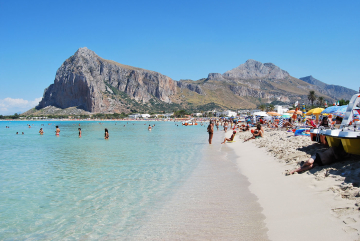
The main beach of San Vito Lo Capo is among the most photographed in the Mediterranean: fine white sand, shallow gently sloping seabed, turquoise waters reminiscent of the Caribbean. It extends in front of the village centre and is reachable on foot from any point of the town. Behind it rises Mount Monaco (532 m), whose rocky wall forms the natural backdrop to the beach.
Practical tips:
- Arrive early (by 9:30) to find convenient parking. The old town is a restricted traffic zone (ZTL) during the summer months
- Alternate between the free beach (east of the pier) and the beach clubs (to the west), with sunbeds and umbrellas for rent
- If the wind is strong, the beach of Macari (5 km to the west) or the coves of the Monte Cofano Reserve offer more sheltered alternatives
Cape San Vito Lighthouse and panoramic walk
For those who still have energy before departure, the Cape San Vito Lighthouse is located at the northernmost tip of the promontory, about 2 km from the village centre. It can be reached with a panoramic walk along the coast (about 30 minutes on foot) or by car. Built in 1859, 43 metres tall, it is still in operation. The stretch of coast leading to the lighthouse offers views over the limestone cliffs, the Zingaro Nature Reserve to the east and the Egadi Islands on the horizon.
If you travel between 18 and 27 September: the Cous Cous Fest
In 2026 the 29th edition of the Cous Cous Fest takes place from 18 to 27 September. The festival transforms San Vito Lo Capo into an international culinary capital for ten days. At the heart of it is the Cous Cous World Championship — eight nations competing with a double jury — and around it a packed programme:
- Case del Cous Cous (Cous Cous Houses) — open every day from 12 to midnight with over 20 recipes from Mediterranean countries (fish, meat, vegetarian and gluten-free versions). Access with tasting ticket
- Bia Theatre in Piazza Santuario — cooking shows with great chefs, tastings of Sicilian wines, meetings and talks
- Expovillage — craft and local produce market along the seafront
- Free concerts on the beach every evening
Warning: during the festival the village is very crowded, accommodation prices rise by 30-50% and traffic is challenging. If you want to attend the Cous Cous Fest, plan well in advance. Info and programme at couscousfest.it.
Return to the airport
After lunch in a village restaurant (where you can't miss a San Vito-style fish couscous), you can start the return journey. The distance from San Vito Lo Capo to Trapani Birgi Airport is about 40 km (~50 minutes by car). For Palermo Punta Raisi Airport, however, it takes about 1 hour and 40 minutes (~106 km).
Considering rental car return and airport check-in, we recommend leaving San Vito Lo Capo at least 3 hours before flight time — 4 hours if heading to Palermo. Alternatively: if your flight is in the late evening, you can head back to Valderice, take a shower at the Resort (asking at check-out for a late check-out) and set off for the airport calmly.
Where to stay to explore Western Sicily
For a 7-day itinerary that touches Trapani, Erice, the salt flats, Marsala, Segesta, the Egadi Islands, the Zingaro Nature Reserve and San Vito Lo Capo, the choice of logistical base makes the difference. Distances in Western Sicily are contained — no stop is more than 50 km from the geographical centre of the itinerary — so the most efficient solution is a single fixed base, avoiding continuous check-ins and check-outs.
Why Valderice is the ideal base
Valderice, on the Gulf of Cornino (also known as Gulf of Bonagia), is strategically located between the historic centre of Trapani and the medieval hilltop town of Erice, with open views over the sea and the Egadi Islands. It is the geographical centre of the itinerary:
- 5 km from Erice (7 minutes by car)
- 8 km from central Trapani and from the port for Favignana (~15 minutes)
- 10 km from the valley station of the Trapani-Erice cable car
- 17 km from Trapani Birgi Airport (~25 minutes)
- 35 km from Segesta (~45 minutes)
- 40 km from the Zingaro Nature Reserve (Scopello south entrance, ~50 minutes)
- 40 km from San Vito Lo Capo (~50 minutes)
- 95 km from Palermo Airport (~1 hour 10 minutes)
In Valderice there are two 4-star hotels with SPA and panoramic sea views over the Gulf of Cornino, ideal as a base for the itinerary. Both are properties in an elevated position: rooms and pools offer sea views from above, while the beach reachable on foot is not their prerogative (for the beach you head to San Vito Lo Capo, Cornino or Custonaci, all just a few minutes by car).
Resort Venere di Erice — 4-star with SPA and 2 pools
The Resort Venere di Erice is a 4-star hotel with 62 panoramic rooms overlooking the Gulf of Cornino. The property develops on a natural terrace 5 km from Erice and 8 km from Trapani, in an elevated position with open views over the sea.
Strong points for a 7-day itinerary:
- Two pools: a panoramic outdoor infinity pool overlooking the Gulf of Cornino (open from 1 June) and an indoor heated pool at 30°C part of the wellness centre, open all year round
- Aqva di Venere Spa: Finnish sauna, hammam, emotional shower with chromotherapy, cold mist, tropical shower, panoramic relaxation area. The Night Spa service is available from April to October and at Christmas (from 8:30 PM to 11:30 PM)
- Rubacuori Restaurant with Sicilian cuisine and fish specialties, including Mazara Red Prawns — Slow Food Presidium
- Buffet breakfast included, free parking, free Wi-Fi
- Reviews: Google 4.6/5, TripAdvisor 4.2/5 (219 reviews), Travellers' Choice 2025 award
Discover the Resort Venere di Erice — check rooms, packages and availability.
Hotel Parco degli Aromi — 4-star with SPA
The Hotel Parco degli Aromi, also in Valderice on the Gulf of Cornino, is another 4-star hotel with SPA. It stands on a panoramic hill surrounded by olive groves, with open views over the sea, over Mount Cofano and the Bay of Bonagia.
Strong points for a 7-day itinerary:
- Aroma Spa with sauna, Turkish bath, emotional showers and hydrotherapy
- Panoramic outdoor pool with views over the sea and Mount Cofano, alongside a heated outdoor hydromassage tub for the cooler season
- Different room types: from the Basic garden-view to the Executive and Suite 35 m² with sea-view balcony and pool
- Aroma Restaurant with cuisine from the Trapanese tradition and Sicilian wines, panoramic terrace overlooking Mount Cofano
- Buffet breakfast, free parking, free Wi-Fi in common areas
- Reviews: TripAdvisor 4.4/5 (704 reviews), Booking.com 8.3/10
Discover the Hotel Parco degli Aromi.
How to choose between the two properties
Both properties are 4-star, with SPA and panoramic sea views over the Gulf of Cornino. Some criteria to help you decide:
- The Resort Venere di Erice is more oriented to the couples and romantic getaway segment, with wellness journey and gourmet dining focus. It has two pools (one indoor heated year-round) and evening Night Spa service, ideal also in the cool season
- The Hotel Parco degli Aromi is more oriented to couples and families looking for a property among olive groves with panorama over Mount Cofano, with different room types (including Executive and Suite of 35 m²)
In both cases the base is the same: Valderice, on the Gulf of Cornino, just minutes from Trapani and Erice, in a strategic position for the entire 7-day itinerary in Western Sicily.
Frequently asked questions about the Western Sicily itinerary
Answers to the most common questions for planning a 7-day itinerary in Western Sicily.
Ready to plan your Western Sicily itinerary?
Choose the Resort Venere di Erice as your base to explore Trapani, Erice, the Egadi Islands, the Zingaro Nature Reserve and San Vito Lo Capo. 4-star, SPA with Night Spa, two pools, gourmet restaurant and panoramic sea views over the Gulf of Cornino.